
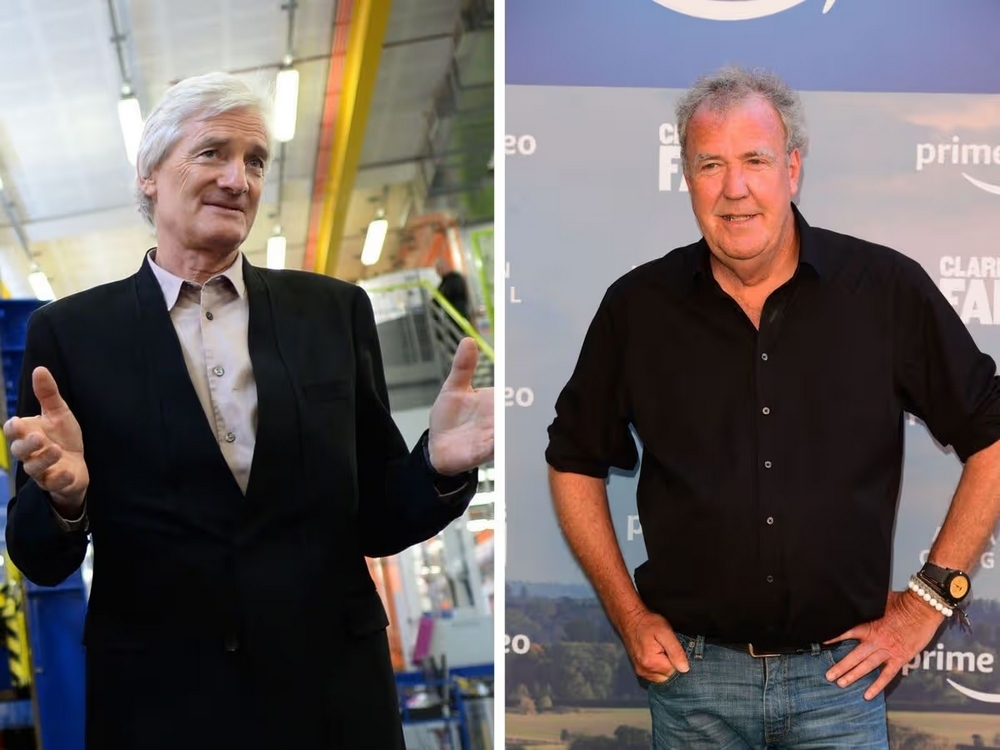
The studio floor was still white-hot after what viewers are already calling the “clash of the titans.” It started as a routine chat, but it ended with a television explosion that has sent shockwaves from the TV studios to the City of London. In one corner, the unfiltered voice of the British public, Jeremy Clarkson. In the other, the billionaire king of tech, James Dyson.
Advertisement
The internet wanted a secret AI scandal. What Britain actually got was something far more explosive: Jeremy Clarkson, Sir James Dyson, furious farmers, Westminster protests and a tax row that exposed one of the deepest divides in modern Britain.
For days, strange posts and recycled clips tried to turn Sir James Dyson into the centre of a mysterious technology drama.
The claim was simple, dramatic — and deeply suspicious. According to online whispers, Dyson had supposedly revealed a secret AI-powered platform, backed by powerful financial interests, while Jeremy Clarkson allegedly erupted in fury over the impact it could have on British workers.
It sounded like the perfect viral scandal: a billionaire inventor, a celebrity firebrand, artificial intelligence, hidden money and the future of jobs.
But there was one major problem.
There is no verified evidence of a televised Clarkson-versus-Dyson clash over a secret AI platform.
In fact, Dyson has previously warned the public about fake online schemes using James Dyson’s name, including fraudulent “Quantum AI” promotions. Those ads are not genuine endorsements. They are part of the wider wave of scam-style content that uses famous faces to make dubious financial claims look credible.
Yet the reason this fake story spread so easily is that Britain already had a real Clarkson-Dyson drama unfolding in plain sight.
And this one was not about artificial intelligence.
It was about land. Tax. Farming. Family businesses. And the furious question of whether Westminster understands rural Britain at all.
The Real Storm Began Outside Westminster
The flashpoint came after Labour’s Budget triggered a fierce backlash from farmers over planned changes to inheritance tax relief on agricultural and business property.
Critics quickly branded it the “tractor tax”.
To the government, the policy was about making the tax system fairer and raising money for public services. To many farmers, it felt like a direct attack on family farms that had been passed down through generations.
The fear was blunt: families could be asset-rich but cash-poor. A farm might look valuable on paper because of land, machinery and buildings, but that does not mean the family has millions sitting in the bank.
So when thousands of farmers gathered around Westminster, the protest became more than a dispute over tax rules. It became a symbol of rural anger.
Then Jeremy Clarkson arrived.