

Speaking amid growing concern about the future of work, Bailey said the rapid development of AI and automation is already changing how companies operate, with businesses increasingly turning to machines and digital systems to perform tasks once handled by employees.
Advertisement
His comments were echoed by HSBC chief executive Georges Elhedery, who said generative AI would inevitably remove some roles while also creating new ones. He urged employees not to resist the shift, but to adapt to the changes and use the technology to become more productive.
The debate intensified after Standard Chartered chief executive Bill Winters faced criticism for suggesting that new technology would replace what he described as the bank’s “lower-value human capital”. The remark came as the bank confirmed plans to cut nearly 8,000 jobs.
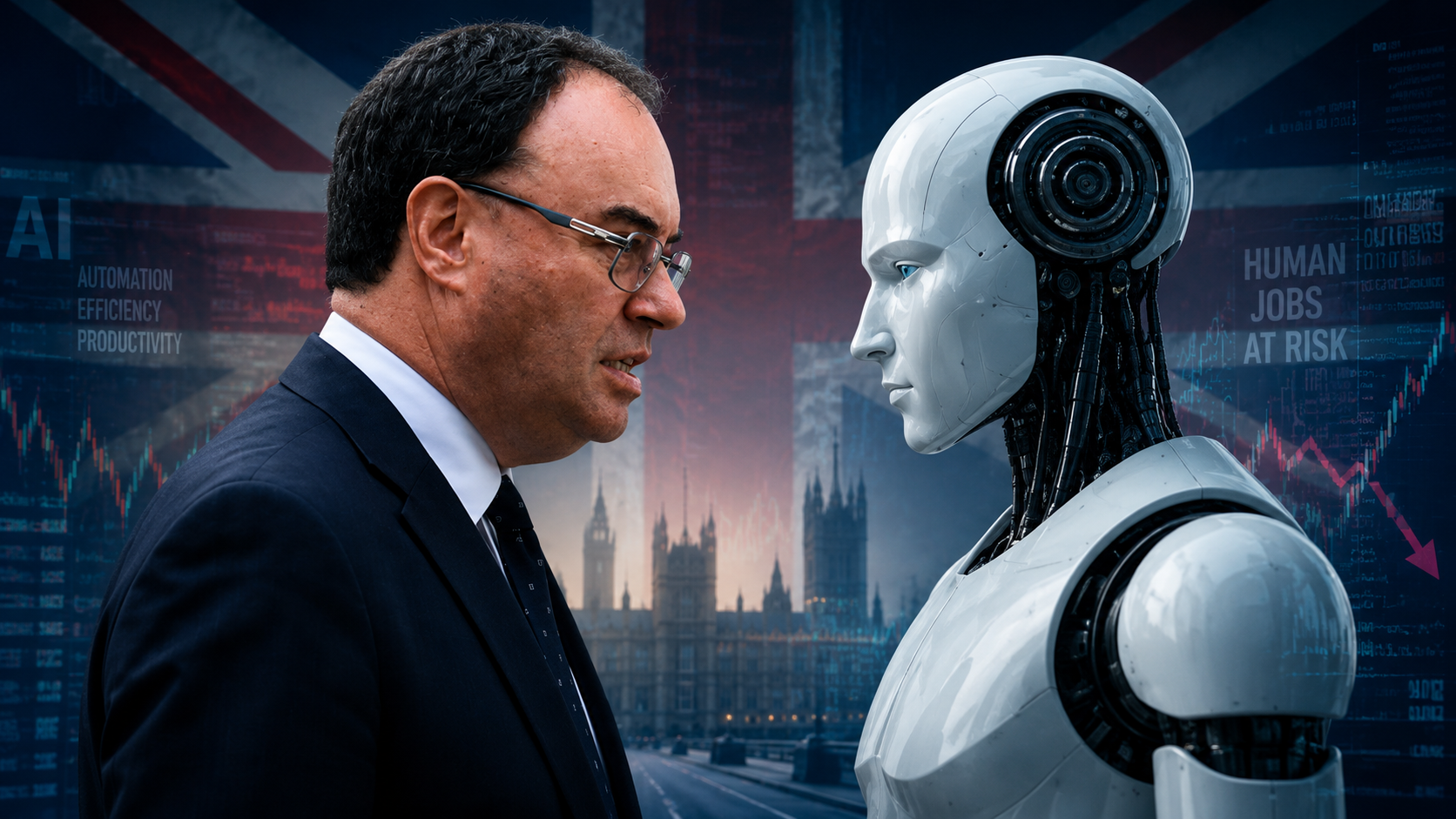
Halimah Yacob, the former president of Singapore, where Standard Chartered has a major operational presence, called the phrase troubling. James Reed, chairman of recruitment firm Reed, also criticised the wording, saying many workers would be alarmed to hear people described in such a way.
Reed said employees, especially younger workers entering the labour market, are already worried about the rise of AI. He added that companies should handle the transition more carefully and show greater responsibility towards their staff.
Bailey made his comments while giving evidence to MPs on the Treasury Select Committee. He said AI could bring major disruption to the labour market sooner than expected.
According to Bailey, the technology has the ability to remove jobs altogether, particularly in areas such as customer service, where chatbots and automated systems are already replacing human interaction. However, he also noted that AI could create new types of work, including roles linked to data science and technology management.
Bailey compared the rise of AI with previous technological revolutions such as electricity, steam power and the internet. Those innovations transformed economies over long periods of time, often taking decades to fully reshape industries. But he warned that AI may have a faster impact because the technology is advancing at such speed.