
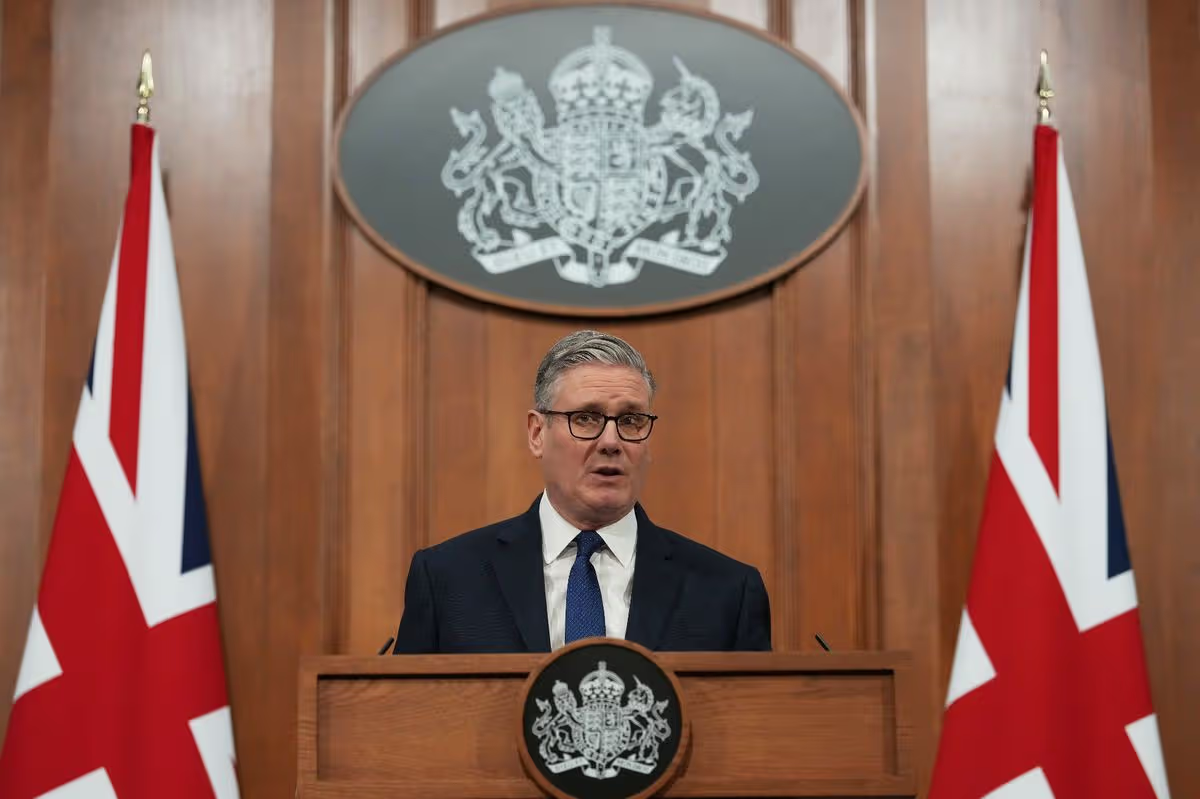
Britain’s Prime Minister Keir Starmer is facing a fresh wave of political pressure, as opposition leaders and senior lawmakers demand his resignation following a series of scandals and internal government conflicts. The calls for his departure have intensified in recent weeks, with critics accusing Starmer of mishandling key appointments, failing to control leaks, and allowing personal relationships to overshadow proper vetting procedures in the Foreign Office and beyond.
Advertisement
At the centre of the latest controversy is the sacking of Ollie Robbins, a powerful deputy foreign minister, after a series of clashes with the Prime Minister’s inner circle. Robbins has accused Downing Street of using him as a scapegoat and claimed he was forced out after resisting political interference in sensitive diplomatic matters. His sudden dismissal has sparked accusations of cronyism and a lack of transparency, with opposition MPs arguing that Starmer must take responsibility for what they describe as a “chaotic” government culture.
The row has also reignited the long‑running debate over Peter Mandelson’s controversial appointment as ambassador to the United States. Mandelson, a close friend of the prime minister, has been dogged by renewed questions over his vetting and past associations, including links to the Jeffrey Epstein case. Critics say that Starmer’s decision to appoint him without full disclosure has damaged the government’s credibility and fuelled claims that top roles are being handed out to allies rather than the most qualified candidates.