
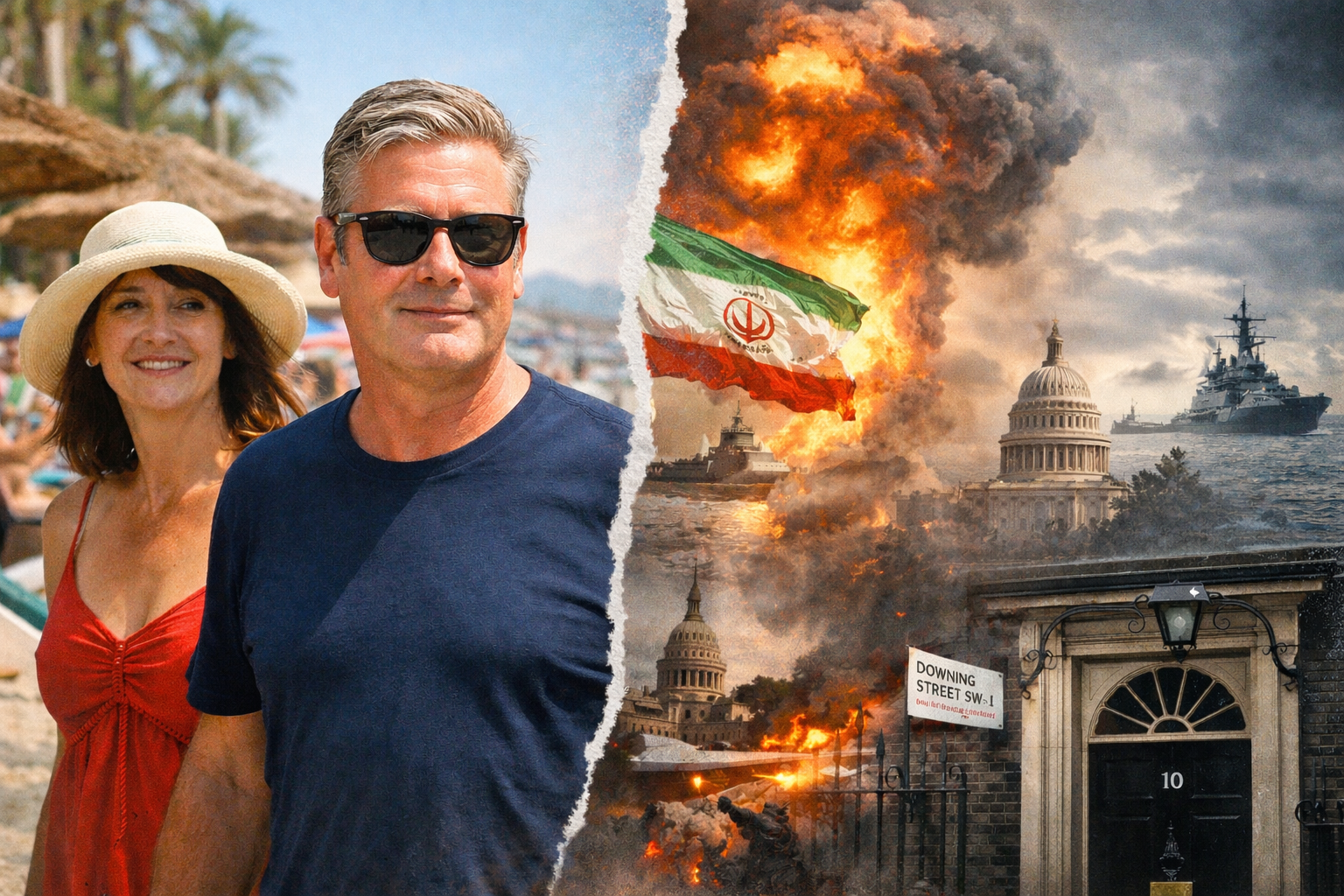
That is where the real political damage lies. Opponents do not need to prove that Starmer mishandled state business from Spain. They only need to point to the contrast between what he once said and what he has now done. In Westminster terms, that is often enough. A leader who built much of his appeal on competence, restraint and a lawyerly sense of seriousness is particularly vulnerable to accusations of saying one thing in opposition and doing another in office.
Advertisement
For Labour, the problem is compounded by the wider atmosphere. The government has been trying to present Starmer as a steady hand amid global instability, especially as Britain attempts to distance itself from Trump’s more volatile rhetoric on Iran. Reuters has reported that Starmer rejected support for a US-backed blockade of the Strait of Hormuz, while Chancellor Rachel Reeves has publicly described the war as a mistake and warned of the economic fallout. That line is meant to show discipline and sobriety at the top of government. But the Spain holiday story cuts against that message, because it invites a far simpler and more politically potent narrative: crisis abroad, confusion at home, and a Prime Minister who was not where many voters felt he ought to have been.
There is, of course, a defence available to No 10. Starmer was not sunning himself through a total vacuum of leadership. He returned, resumed direct engagement, and has since taken a firm public stance against escalation, while refusing to be dragged into Trump’s preferred course. Some of his allies would argue that this demonstrates exactly the kind of calm decision-making Britain needs: not performative panic, but measured control. There is some force in that argument. Still, politics is an arena in which memory matters. And Westminster has a long memory for lines that come back to haunt those who first delivered them.
That is why this episode feels more than a passing embarrassment. It strikes at one of Starmer’s core claims about himself — that he represents a cleaner, more serious and more disciplined style of leadership than the politicians he replaced. If he is now seen to be falling into the same trap he once condemned in others, the charge of hypocrisy will stick far longer than the details of the holiday itself.
For now, the fallout is political rather than existential. But in British public life, moments like this have a habit of lingering. Not because they end careers overnight, but because they crystallise a doubt. And the doubt now facing Starmer is a simple one: when the pressure rose, did the Prime Minister live up to the standard he once demanded of everyone else?